
residential
Residential Concrete Services on the Sunshine Coast
You get a written quote that does not change, a start date that actually holds, and finished concrete built to last to Australian standards.
Driveways
Slabs
Patios
Crossovers

Delivered by Anthony Quinn, civil engineer with 15 years
Delivering major civil and infrastructure projects across Australia. The same standards he applies on commercial sites, applied to your residential project.
QBCC Licensed Contractor
License No. TBC
Public Liability Insured
$20M Cover
Civil Engineering
15+ Years Experience
Sunshine Coast & SEQ
Locally Based
ISO-Aligned Safety
Quality Systems & Processes
Who Are You?
What are you working on?
Concrete Driveways
A properly built driveway starts with the right base, the right mix, and the right reinforcement. Not shortcuts.
House Slabs
New builds, extensions, and granny flats. Designed and poured to AS 2870 with full steel reinforcement as standard.
Patio and Shed Slabs
Outdoor living areas and outbuildings done properly. Preparation and drainage considered from the start, not after the fact.
Footpaths and Crossovers
Council-compliant footpaths and vehicle crossovers. We flag permit requirements before the job starts, not after.
The Trust Problem
Most Homeowners Have Been Let Down by a Concrete Contractor at Least Once
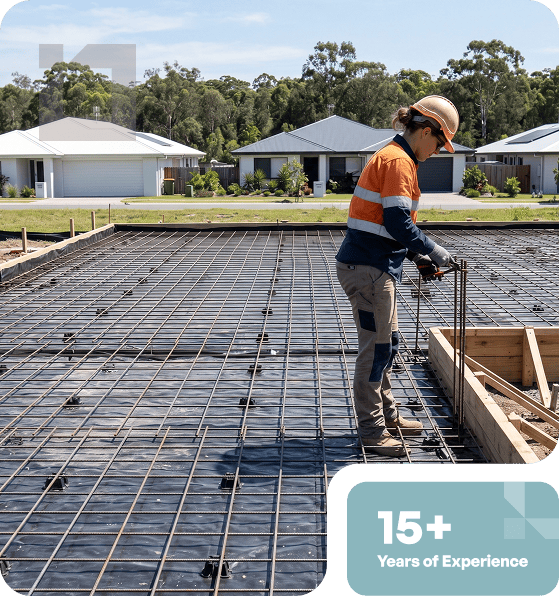
You have probably been through it before. The quote looked reasonable. The contractor seemed fine. Then the start date moved. Then the price changed once they were already on site. And when the job was finally done, it was not quite what you had in mind. Some of those jobs crack within a year.
Not because concrete is unpredictable. Because the base was never prepared properly, the reinforcement was skipped, or the mix was wrong for the conditions. Nobody explained any of that to you before it happened. I hear this from almost every residential client I speak to. And honestly, it does not surprise me.
I have spent 15 years running commercial civil and infrastructure sites across Australia. On those jobs, documentation is mandatory, programs are locked in before anyone mobilises, and the standard of preparation is non-negotiable. You do not get to skip steps because the job is small or the timeline is tight.
What I found when I started taking on residential work is that most homeowners have never experienced that level of planning on their own project. They have just been handed a price and a rough start window and told to wait.
That is not how I work. Before anything happens on your site, you have a written scope, a fixed price, and a confirmed start date. The preparation, the reinforcement, and the mix are right for your specific job. And if something needs to be flagged before we start, I will tell you.
“Here is exactly what working with QCG looks like”
How QCG Works for Residential Clients
Here is how every residential concrete job on the Sunshine Coast runs from first contact to finished pour. No surprises. No moving parts you were not told about.
STEP 1
On-Site Assessment
We come to you. We look at the site, understand what you need, and ask the right questions before anything is scoped or priced. Access, ground conditions, drainage, finish type. All of it gets considered before a number is put in front of you. The site visit takes around 20 to 30 minutes. There is no sales pitch on the day and no obligation at any point.
STEP 2
Written Fixed Quote
You receive a written quote that covers scope, materials, reinforcement, and price. That number does not change once you accept it. No variations appearing after we start. No surprises when the invoice arrives.
STEP 3
Confirmed Start Date
When you book, you get a date. Not a window. Not a call the week before to lock it in. A confirmed start date that we show up for.
STEP 4
The Job and the Handover
We arrive when we said we would, do the work to the standard we described, and leave the site clean. Before we go you get a clear handover including curing times, any care instructions, and a direct line to me if anything needs attention.
Concrete Driveways
Sunshine Coast
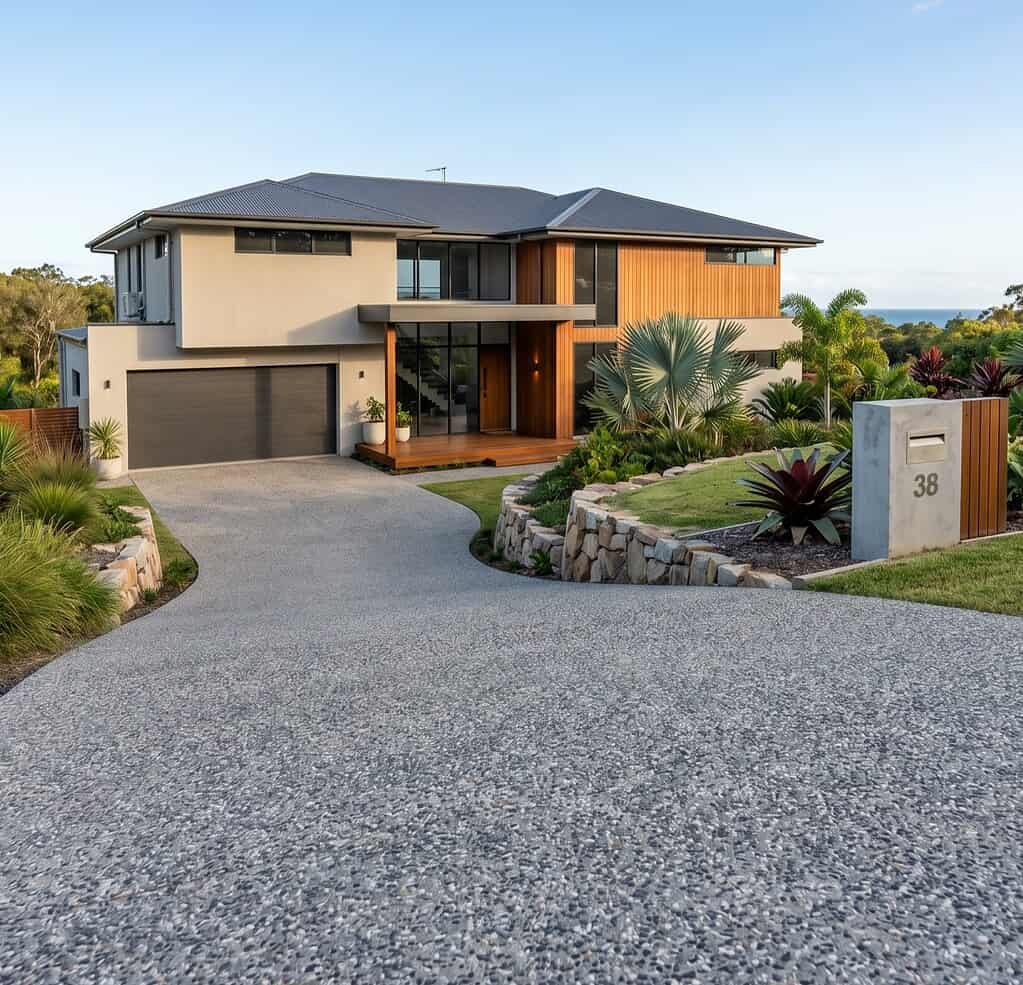
Most concrete driveway failures on the Sunshine Coast come down to the same three things: a base that was not properly prepared, reinforcement that was skipped, and a mix that was wrong for the conditions. QCG addresses all three before quoting.
When you need it:
A new driveway is usually required for a new build, a home extension changing the access point, an existing driveway that has cracked or lifted beyond repair, or a surface upgrade from gravel or pavers to concrete.
What QCG does on every driveway pour:
The standard minimum thickness for a residential driveway in Australia is 100mm. For properties with heavier vehicles, that increases to 125 to 150mm. QCG confirms the correct specification for your site before quoting, not after. Steel mesh reinforcement is not an optional upgrade. It is a standard requirement and it is included on every job.
Key steps on every driveway pour:
- Site assessment including access, drainage, and ground conditions
- Subbase preparation and compaction to the correct depth
- Formwork set to confirmed levels and falls
- Steel mesh reinforcement placed to specification
- Correct concrete mix ordered for the application
- Controlled pour, finish, and curing process
Concrete driveways across the Sunshine Coast:
QCG delivers concrete driveways across Buderim, Maroochydore, Noosa, Caloundra, Kawana Waters, Sippy Downs, and surrounding Sunshine Coast suburbs.
How long does a concrete driveway last on the Sunshine Coast?
A properly built concrete driveway in Queensland lasts 25 to 30 years. Exposed aggregate finishes can reach 30 to 40 years with basic maintenance. Early cracking and failure almost always points to the same causes: inadequate base preparation, missing or incorrectly placed reinforcement, or the wrong concrete mix for the conditions. A slab built to the correct specification simply does not fail early.
“Plan it properly. Pour it once.”
Anthony Quinn
Director, QCG
House Slabs Sunshine Coast
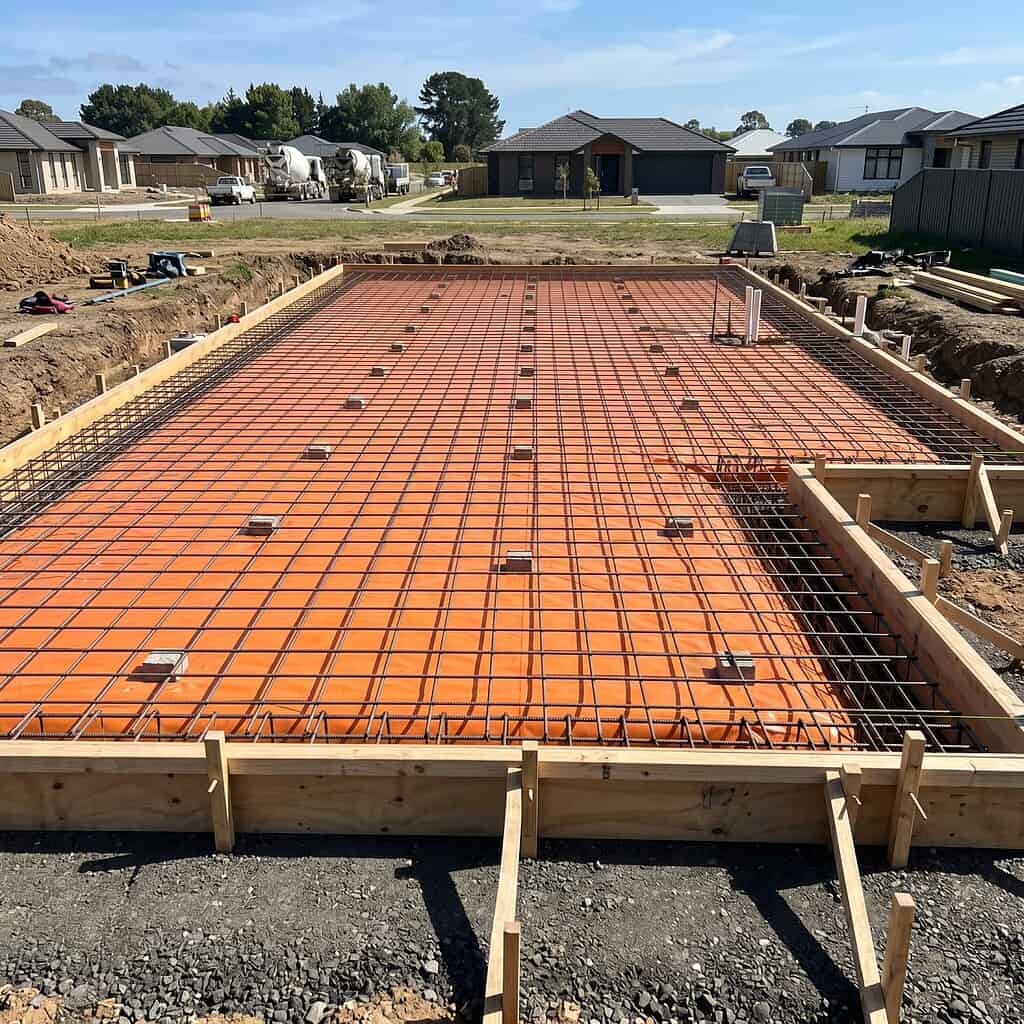
A house slab is the foundation everything else sits on. Get it wrong and you are not just fixing concrete. You are dealing with structural problems that affect the entire build above it. Most slab failures trace back to the same issues: poor subbase preparation, incorrect reinforcement, and a design that did not account for the actual soil conditions on the site.
When you need it:
A new house slab is required for a new build, a granny flat or secondary dwelling, a home addition or extension, or a knockdown rebuild. If your project has engineering drawings or soil reports, QCG works directly from those. If not, we factor site conditions into the specification before anything is quoted.
What QCG does on every house slab:
Residential slabs in Australia are designed to AS 2870, the national standard for residential slabs and footings. Most homeowners have never heard of it. Every QCG house slab is built to that standard. Steel mesh reinforcement, typically F62 or SL62 grade, is not an optional extra on a house slab. It is a baseline requirement for crack control and structural performance and it is included on every job as standard.
Key steps on every house slab:
- Review of site conditions, soil classification, and any engineering documentation
- Subbase preparation, compaction, and moisture management
- Formwork set to confirmed levels with correct falls
- Steel mesh reinforcement placed to AS 2870 specification
- Correct concrete mix design for the site classification
- Controlled pour, finish, and curing to minimise shrinkage cracking
House slabs across the Sunshine Coast:
QCG delivers house slabs for new builds, granny flats, and extensions across Buderim, Maroochydore, Noosa, Caloundra, Kawana Waters, Sippy Downs, and surrounding Sunshine Coast suburbs.
What should be under a concrete house slab in Queensland?
A correctly prepared house slab in Queensland requires a compacted subbase, a vapour barrier where required by site conditions, and correctly placed steel reinforcement to AS 2870. The soil classification of your site determines the slab thickness and footing design. Skipping or cutting corners on any of these steps is the most common reason residential slabs crack, move, or require costly remediation within the first few years.
“Plan it properly. Pour it once.”
Anthony Quinn
Director, QCG
Patio and Shed Slabs Sunshine Coast
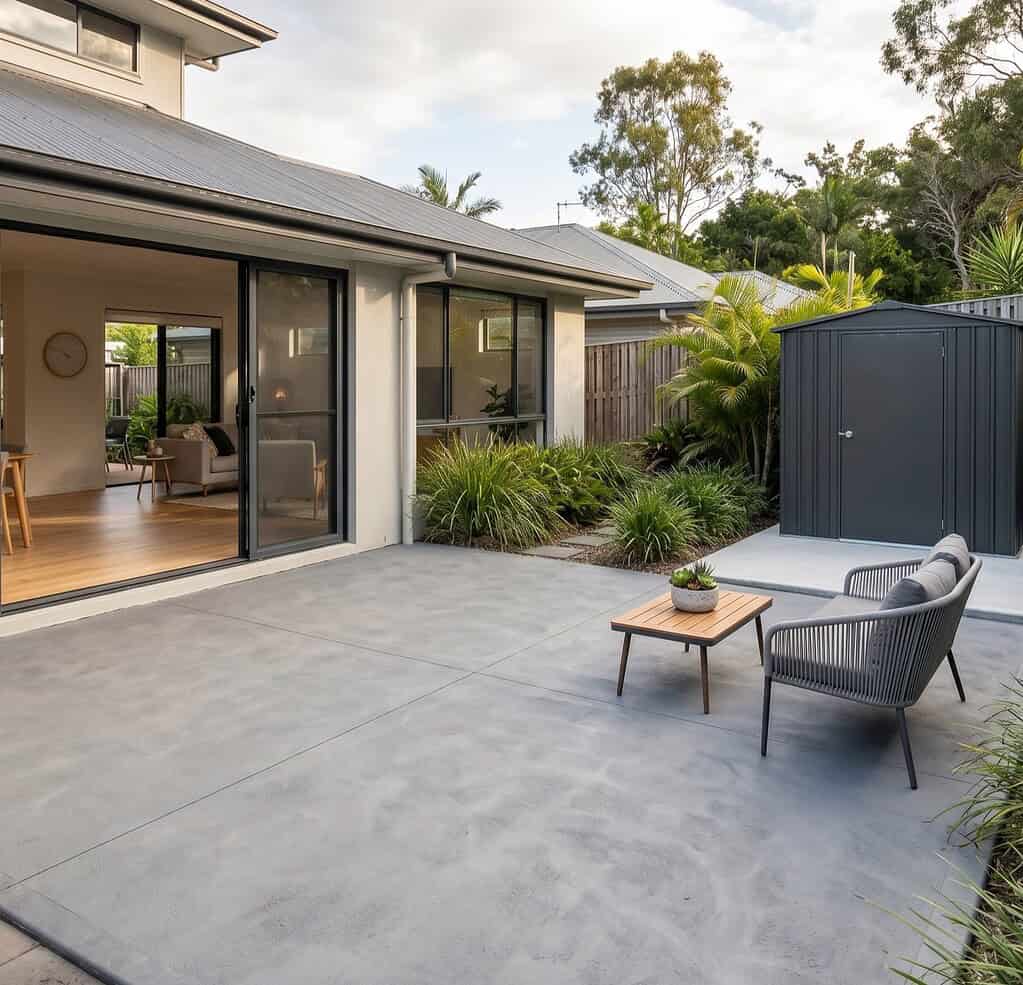
Patio and shed slabs are the most commonly underbuilt concrete jobs on residential properties. Because they are not structural in the same way a house slab is, they are often treated as low-priority pours. The result is slabs that crack, lift at the edges, or pool water because drainage was never considered before the concrete went down.
When you need it:
A patio or shed slab is required for a new outdoor entertaining area, a garage or workshop, a garden shed or storage structure, or a covered alfresco extension to an existing home. The finish type, intended use, and drainage requirements all affect how the slab needs to be designed and poured.
What QCG does on every patio and shed slab:
Drainage falls are set before the formwork goes in, not corrected after the fact. The subbase is compacted to the correct depth for the intended load. Steel mesh reinforcement is included as standard. The concrete mix is specified for the application, whether that is a plain finish, exposed aggregate, or a coloured surface.
Key steps on every patio and shed slab:
- Site assessment including drainage direction and fall requirements
- Subbase preparation and compaction to load requirements
- Formwork set with correct falls away from the structure
- Steel mesh reinforcement placed to specification
- Correct concrete mix and finish type confirmed before pour
- Controlled pour, finish, and curing process
Concrete driveways across the Sunshine Coast:
QCG delivers concrete driveways across Buderim, Maroochydore, Noosa, Caloundra, Kawana Waters, Sippy Downs, and surrounding Sunshine Coast suburbs.
Why do patio slabs crack on the Sunshine Coast?
Patio slab cracking is almost always caused by one of three things: insufficient thickness, missing reinforcement, or a subbase that was not properly compacted before the pour. Concrete naturally shrinks as it cures. Without correct reinforcement and planned control joints, that shrinkage creates visible cracking. A correctly built patio slab with proper mesh and base preparation will not crack under normal residential use.
“Plan it properly. Pour it once.”
Anthony Quinn
Director, QCG
Footpaths and Crossovers Sunshine Coast
A vehicle crossover connecting your property to a council-controlled road is not a job you can just book and start. Get the process wrong and you are either pulling up work that does not meet council requirements or paying for a permit after the fact. Most homeowners do not find this out until it is already a problem.
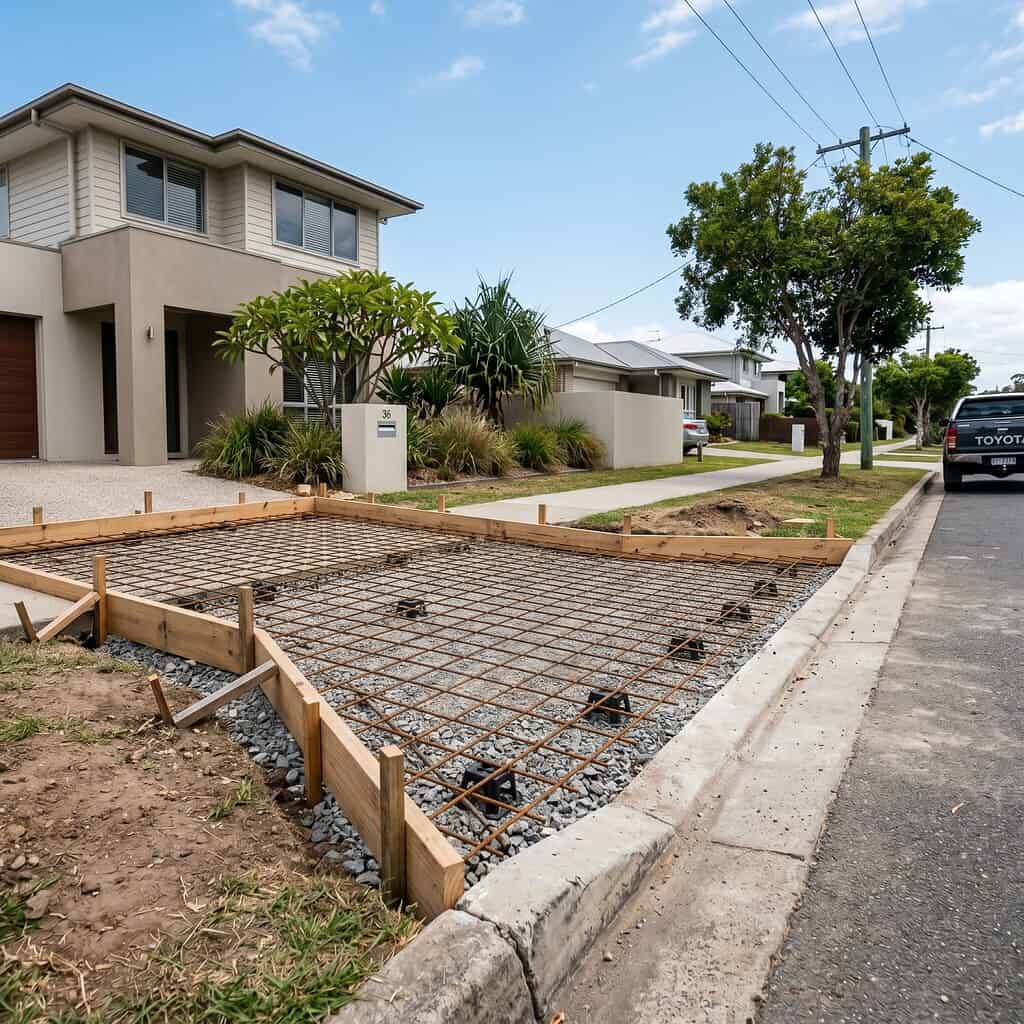
When you need it:
A new footpath or crossover is required when building a new driveway access from a council road, upgrading an existing crossover that is cracked or deteriorating, adding a secondary access point to a property, or constructing a footpath along a property boundary. Council permit requirements vary by location and need to be confirmed before any work begins.
What QCG does on every footpath and crossover:
We identify permit requirements at the scoping stage, before you have spent anything. The crossover is built to council specification for your local area, whether that is Sunshine Coast Council or another local authority. Levels, falls, and kerb tie-ins are confirmed before the pour. The finished result meets the standard required for council sign-off.
Key steps on every footpath and crossover:
- Permit requirements identified and confirmed at scoping stage
- Council specification reviewed for the relevant local authority
- Subbase preparation and compaction to the required depth
- Formwork set to confirmed levels and kerb tie-in heights
- Correct concrete mix and finish to council standard
- Controlled pour, finish, and curing process
Footpaths and crossovers across the Sunshine Coast:
QCG delivers footpaths and vehicle crossovers across Buderim, Maroochydore, Noosa, Caloundra, Kawana Waters, Sippy Downs, and surrounding Sunshine Coast suburbs.
Do I need council approval for a concrete crossover on the Sunshine Coast?
In most cases, yes. A vehicle crossover that connects to a council-controlled road requires a permit from your local council before work begins. Requirements vary depending on your property location and the type of road it connects to. QCG identifies and flags any permit requirements during the initial site assessment so you know exactly what is needed before the job is quoted or booked.
“Plan it properly. Pour it once.”
Anthony Quinn
Director, QCG
Why QCG?
Why Homeowners On The Sunshine Coast Choose QCG
This is not a list of things we think sound good. These are the things you can actually hold us to on every residential job.
Fixed written quote before any work begins.
The price in your quote is the price on your invoice. Once you accept the scope, the number does not move. No variations appearing mid-job. No additional charges that were not discussed upfront.
A confirmed start date, not a window.
When your job is booked, you get a specific date. We show up on that date. If something changes on our end, you hear from us directly and in advance.
Correct specification on every pour.
Every residential job is built to the correct thickness, with the correct reinforcement, and the correct mix for the site conditions. These are not upgrades. They are the baseline standard on every QCG job.
A clean site at the end of every job.
We leave your property the way we found it, minus the concrete that was not there before. No waste left on site. No mess handed to you to deal with.
A direct line to our team throughout.
You are not dealing with a call centre or a rotating roster of contacts. Our team is reachable from first enquiry through to handover. If something needs attention after the job, you know exactly who to call.
Frequently Asked Questions
Whether you are a head contractor assessing a new concrete subcontractor or a homeowner planning a concrete project on the Sunshine Coast, these are the questions we hear most often.
Do I need council approval for a concrete project in Queensland?
It depends on the type of work. Most standard residential concrete jobs do not require building approval, but a vehicle crossover connecting to a council-controlled road usually requires a permit from your local council, such as Sunshine Coast Council. Concrete slabs for new structures, sheds, or outbuildings may also require building approval depending on size and intended use. QCG will flag any approval requirements identified during scoping so you know before the job starts.
Why does concrete crack and how do you prevent it?
Some minor surface cracking in concrete over time is normal and does not affect structural integrity. Significant cracking within the first few years is almost always caused by inadequate base preparation, incorrect mix design, or missing reinforcement. A well-built concrete slab or structure on the Sunshine Coast can last 25 to 30 years or more with proper design and maintenance. QCG uses the correct concrete mix, properly placed steel reinforcement, and a controlled curing process to minimise cracking risk and give your concrete the best chance of reaching that lifespan.
What is the difference between a standard concreter and a commercial concrete contractor on the Sunshine Coast and South East Queensland?
A standard concreter typically provides labour for straightforward residential pours. A commercial concrete contractor like QCG brings engineering-level systems, full QA documentation including ITPs and SWMS, program management, and a director who is directly accountable for delivery. If your project requires documentation, compliance sign-off, or program certainty across the Sunshine Coast or South East Queensland, a standard concreter is not the right fit.
How long does a concrete pour take and when can I use it?
Most residential concrete jobs on the Sunshine Coast are completed in a single day depending on scope and access. Concrete is typically safe to walk on within 24 to 48 hours but should not carry vehicle traffic or heavy loads for at least 7 days. Full design strength is reached at 28 days. QCG will confirm the full curing timeline before the job starts so there are no surprises.
Do I need RPEQ engineering for a commercial concrete project in Queensland?
It depends on the project scope, classification, and specification requirements. For many commercial and civil concrete projects in Queensland, RPEQ engineering sign-off is required or strongly recommended to meet NCC and AS 2870 requirements, including Form 15 and Form 12 certification. QCG operates with an RPEQ engineering partnership, which means we can facilitate that requirement without you having to source a separate engineer and manage the interface yourself.
How much does residential concreting cost on the Sunshine Coast?
Residential concreting costs on the Sunshine Coast vary depending on the type of work, size, access, ground conditions, finish type, and reinforcement requirements. As a general guide, plain reinforced concrete work typically starts from around $80 to $130 per square metre, with exposed aggregate, decorative finishes, or more complex pours priced higher. The only way to get an accurate number for your specific job is a written quote after a proper site assessment. Contact QCG for a residential quote with no obligation.
What documentation does a concrete subcontractor need to work under a Tier 1 head contractor?
As a minimum, most Tier 1 and Tier 2 head contractors require a current SWMS, an Inspection and Test Plan, cylinder and slump test records, reinforcement inspection sign-off, and public liability insurance at the required level. QCG produces all of this as standard on every commercial job. We do not need to be asked twice.
Ready to Get a Quote for Your Residential Concrete Project?
If you have read this far you already have a good sense of how QCG works. The next step is a straightforward conversation about your project. Get in touch and we will arrange an on-site assessment at a time that suits you. Written quote to follow. No obligation, no pressure.